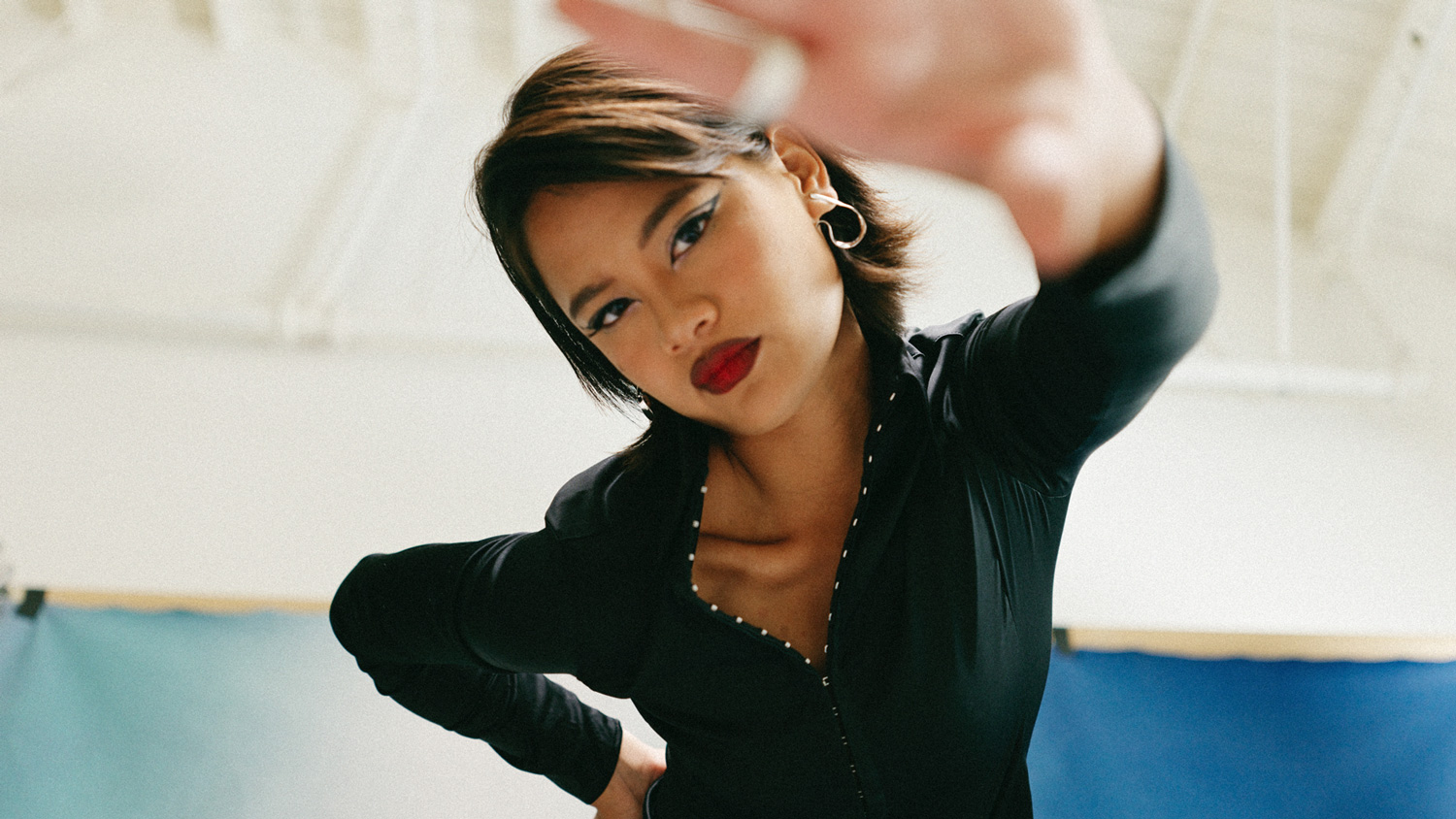

It was the second day of SXSW Sydney. The time was 11:30pm. I flashed my neon-coloured wristband and stepped into the Abercrombie Hotel. Dungi Sapor was already well into her headlining set of the ‘Taiwan Now’ showcase. Standing behind a large DJ deck, she effortlessly filled the room with driving beats and atmospheric melodies. Between songs, she’d throw her hands up, signalling to anyone left standing against the wall to make their way to the dance floor. As the energy escalated, two dancers who had accompanied her took to the floor. Adorned in ceremonial attire, they performed a traditional dance before corralling everyone to link arms and trot in a circle. It was joyous, messy, and unifying.
Growing up in Hualien as a member of the Amis community, Dungi Sapor has made it a mission to showcase a side of Taiwan’s identity that has historically been underrepresented. She envisioned the dance floor as a space where she could share the sounds and stories of Indigenous Taiwanese culture with local and international audiences. Since 2018, she has played shows and festivals across Asia, Europe, the USA, and, of course, Australia.
We talked about her process of blending together techno instrumentals and Indigenous Taiwanese folk sounds, how she balanced her legal advocacy and music, and her love of mountain vegetables.
Welcome to Sydney.
Thank you.
When did you arrive?
Yesterday? Oh! Two days ago in the evening.
Have you got to see anything in Sydney?
Yes! I went to the Opera House. Actually, I’ve performed in Sydney before. I went and visited a club I’d been to last time I was here.
Oh, really? Which club?
Hmmm, they used to throw a Korean night. I think it was 3MW nightclub?
I know where you’re talking about. I can’t fully remember the name either because it’s been a long time since I’ve been.
I just flew in from Berlin.
From Berlin?!
Yeah. And after this (SXSW Sydney) I’m flying back. I have more shows to play.
I heard the Berlin clubbing scene is amazing.
Very amazing.
What’s the Berlin scene like?
A lot of techno. The vibe is dark, and also very sexy (laughs). There’s so many different kinds of clubs, styles, and genres of music. Just before this interview I was talking with my team about how in Berlin you’re allowed to have open conversations about sexuality and so many other things.
It seems like a very liberal city. Very open minded.
Very (laughs).
So you grew up in Hualien?
Yeah.

Can you talk about the city itself and its connection to the Indigenous people of Taiwan?
It’s very similar to New Zealand. There’s the countryside and many different tribes who live in the mountains and the beach. There’s a big Indigenous population.
I read there’s a lot of seafood?
Seafood? Oh, there is but I’m from a mountain village. I don’t really know a lot about the sea side of Hualien. On the beaches they live off fishing, but in the mountains we hunt and just grab vegetables (laughs). The cultures are very different, even though we’re all called Amis.
Interesting.
Very interesting (laughs). I tend to eat a lot of wild vegetables when I’m back in Hualien.
Oh, really? I need to. Especially when I’m in Taiwan next.
You definitely should. The food is so different.
Do you miss it when you’re in Berlin?
Sure. But, a lot of people in Berlin are vegetarian. I get to eat a lot of vegetarian food.
Do you like Berlin?
Yeah, I like it a lot.
When you went to university, you first studied to be a lawyer for Indigenous causes.
Yes.
Why is that such a strong part of your career and character?
When I was younger, I was working for an organisation that sent me to New Zealand to understand the Māori people. While I was there, I loved how proud they were of their culture, language, and music. I questioned why I couldn’t do that for the Amis. When I came back, I thought I should try to become a DJ and show my pride through my music.
Also I want to say it’s because of Sydney!
Sydney (laughs)?
After New Zealand. I traveled to Sydney. I saw a DJ on stage and thought the way they played was very special. I remember thinking that I should try doing this. Step one was New Zealand, step two was Sydney, specifically the Sydney club scene. When I got back to Taiwan, I tried to mix what I learnt from New Zealand and Sydney with myself. I feel like I’m still working on it.
Is being here a full circle moment?
Yes (laughs)!
From my research, I learnt that you played piano growing up.
Uh-huh, yes.

And then you went from DJing to now producing your own music. Can you talk about what it’s like to transition from one to another to now making original music?
Piano was just for fun (laughs). When I was in uni I joined the DJ club. During this time I came across the story of ‘Enigma.’
What’s that?
Okay, so this is a story about a famous Taiwanese tribe’s song. In 1996, the Atlanta Olympics theme song had remixed an Amis chant as a part of the composition.
Oh really?
Yeah! But they didn’t get copyright to use it. So Taiwan tried to fight for the copyright. If they used our song, why can’t they pay us for it? As I studied the story more, it stood out to me that the west began to understand Indigenous Taiwanese music through this remix. This story really inspired me to do what I’m doing now.
What is the process of combining techno with Indigenous music and sounds?
I visit the different tribes and collect their songs and languages. As someone from a tribe, I understand the significance and meaning of what they’re lending me. I know how to transform what I’m given into music. I’m constantly in the process of doing this.

You’re doing it even now?
Yeah! We have sixteen original tribes and within that smaller tribes. Some of them are Amis, some of them are Atayal. They all want to collaborate with me. I will go to them and record their traditional songs and spoken words. I make sure to pay them full respect by getting the copyrights to remix everything into my music. I’m trying to preserve traditional Taiwanese culture.
I think that’s incredible.
I’m very tired (laughs).
Where do you think you fit in in the Taiwanese music scene?
I used to be just a club DJ. I didn’t really focus on anything remotely cultural. But after hearing and telling more Amis stories, my identity has become inseparable from Indigenous Taiwan.
I still think I fit in with the Taiwanese music scene. But I also feel like I’m finding my own way in music, a new way.
Do you feel like Taiwan’s mainstream music and media do enough to represent and preserve Indigenous Taiwanese culture?
Our last president, Tsai Ing-wen, made it a priority to promote local culture and identities. Now on our national days, we have tribes performing during ceremonies. It’s very similar to how New Zealand incorporates the Maori people into all their official ceremonies.
But, ten years ago this would never have happened. For the Paris Olympics, I was invited to perform and represent Taiwan. If it were the one before that (Tokyo), there never would’ve been a chance of this happening for me.
I think as our government continues to support local Taiwanese culture, things are changing. It does feel different now. I’m not sure if we’re fully at the turning point just yet. They can still go deeper and discover more stories. There’s still more possibilities to explore.
For a little bit of context, what is the Taiwanese clubbing DJ scene like?
So the clubbing scene in Taiwan still follows a lot of trends. K-pop is popular right now. Korean DJ’s get invited over to perform all the time. They usually play what’s popular right now. I feel like I’m more famous outside of Taiwan (laughs).
Yeah. I mean you’re playing in Berlin!
Yeah, I love Berlin and it feels like they love me.
Do you find that there’s a big difference between international and local audiences?
There’s so many differences (laughs). I feel like sometimes Taiwanese people don’t know how to react. A part of performing is guiding and teaching them. The hope is that they’ll follow your lead. If you don’t try, they might just stand there and be a little disinterested. But in Berlin and other countries, they’re so used to clubbing that they can just listen and groove all by themselves. They don’t need anyone to show them anything.
In Taiwan you have to keep showing the audience. I usually have to emcee, dance, and generally be more entertaining. It’s a lot harder and can be very tiring (laughs).
That sounds like a lot of work (laughs).
Yeah (laughs).
As a final question, what do you have lined up for the rest of the year and early 2026?
I’m looking to work with some European producers and artists to collaborate with. I’d love to have songs released next year that focus more on the European market. I’d also love to get involved with the Australian music scene. What’s the Aussie scene like?
It’s good. I think a lot of it is in Sydney and Melbourne. It’d probably be best to go between both cities.
I heard Melbourne is more experimental.
I think in general, there’s a lot of events throughout the year that tend to be more progressive like Soft Centre and Mode Festival. We can talk off the record (laughs).
Yes, please do! I want to discover and develop more outside of Taiwan. I feel like I’m more understood outside of Taiwan (laughs).
Easy! Is there anything you’d like to mention before we wrap up?
Oh! Before I forget. On my last album which came out last year, I featured the Australian group Tjaka. I’d love to perform with them one day.
I’ll make sure to re-listen to the track and check them out.
Special thanks to the Thinking Loud and SXSW Sydney for making this happen. All photo courtesy of Roger Lin, NPCC.