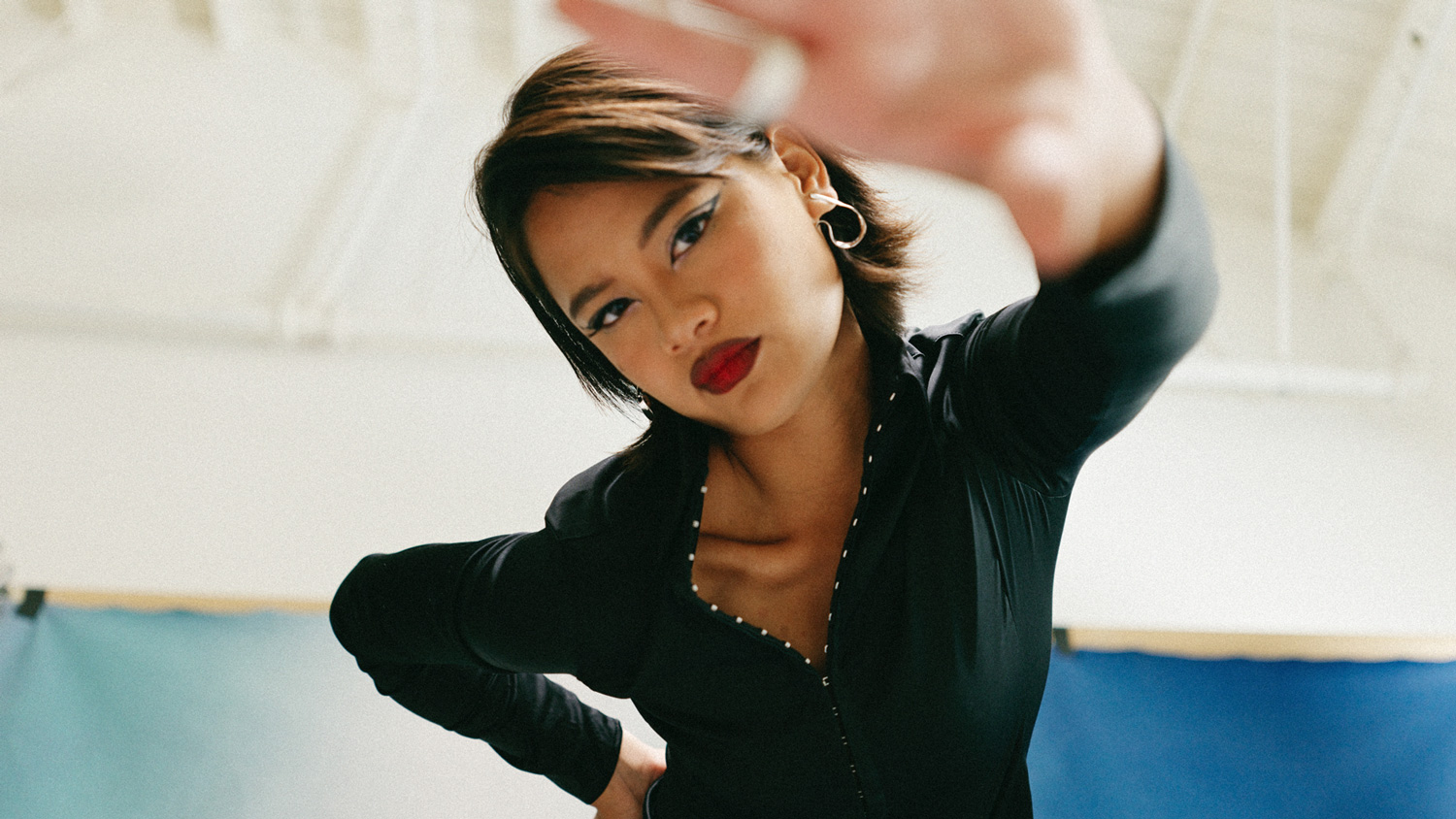
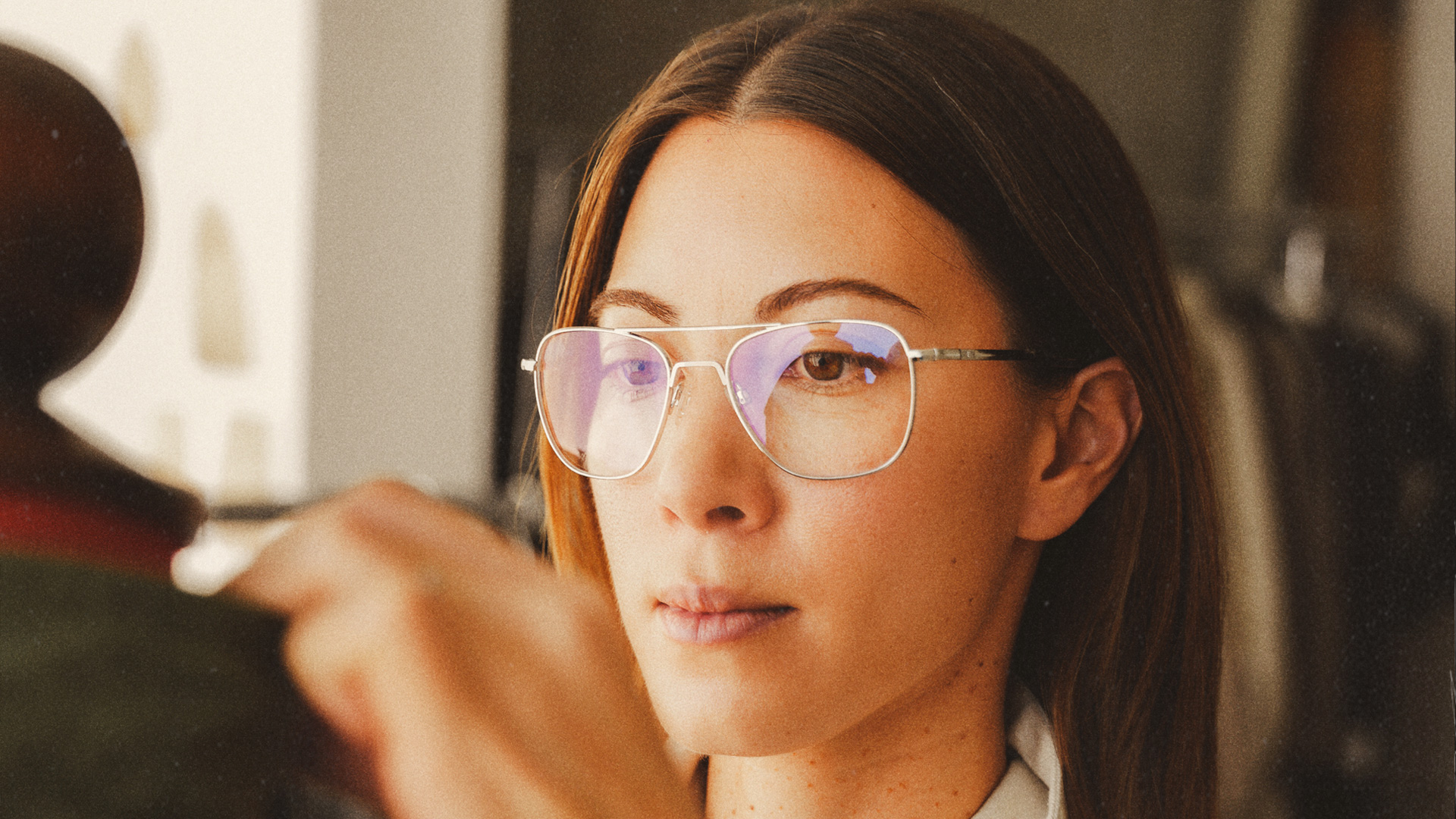
Lauren Yates is the founder of the brand, W’menswear, and author of the famed blog, Ponytail Journal. Discovered and recruited into modelling at the young age of 14, Yates’s journey through fashion has seen her both in front and behind the camera. However, it was her aptitude with words that would eventually lead to the multifaceted creative we know her as today.
In 2013, Yates began publishing posts on her blog, Ponytail Journal. Beginning as an exercise in writing, it quickly became an online destination for vintage clothing, food, music, and lifestyle content. With humour, earnestness, and a sharp eye for style, Yates connected with people from around the world who were as enthusiastic about Japanese boro techniques and shuttle loom denim as she was. Over the past decade, Yates has lent her voice to publications such as Nylon Thailand, Vogue Australia, and Condé Nast Traveller.
Currently, Yate’s energy is directed towards her brand W’menswear. Based in Bangkok, the label utilises enduring textile traditions to create pieces deeply rooted in the history of women and workwear. Since its debut in 2015, W’menswear has gone from strength to strength, being stocked in over eleven countries worldwide and featured in the likes of POPEYE, WWDJAPAN, and Highsnobiety. Yate’s has established herself as a producer and purveyor of the heritage styles she once drew attention to with Ponytail Journal.

Hi Lauren! Firstly, thanks for taking the time to chat. How has the year been treating you so far?
Hi friends, it’s such a pleasure. The year has been quite full already, I had a baby at the end of last year, so I’ve been learning how to navigate being a new mum while continuing to run the business, which has been both challenging and really wonderful.
On the brand side, it feels like we’re entering a more mature phase. We’re slowly evolving into more of a wardrobe house, refining and expanding our pattern blocks to better accommodate a wider range of body shapes, for both men and women.


We’re also in the final edit of a documentary called Boro For Peace, which I’m very excited about. It’s been a long process, so it feels special to finally see it coming together.

Looking back, you’ve taken on nearly every role in the fashion world, from model to photographer, designer, and writer/enthusiast, thanks to Ponytail Journal. What do you think has been key to your career longevity?
I think a big part of it has been staying open to new experiences and not being too fixed in one role. Moving between different parts of the industry has given me a broader perspective and kept things feeling fresh.
At the same time, I’ve learned the importance of creating some kind of framework around how I work. The creative side can be quite fluid, but having structure helps sustain it over time.
And then a lot of it really comes down to learning through doing. There have been plenty of mistakes along the way, but each one gives you a clearer sense of how you want to approach things the next time.
Does it ever feel so surreal to see that the type of content you were pursuing when Ponytail Journal started in 2013 is now mainstream, being synonymous with menswear enthusiasts, algorithms and explore pages?
Absolutely! When Ponytail Journal first started, it felt quite niche. There wasn’t really a clear space for that kind of perspective yet. Over the past decade, the internet has grown so much, and it’s been interesting to see those ideas become more visible and widely shared.
What I appreciate most is how people have taken those core ideas and adapted them into their own point of view. It’s no longer about one aesthetic or way of dressing, it’s become much more personal and diverse.
In many ways, it feels like a more open moment now. There’s a wider acceptance of different identities, styles, and narratives, which makes the space feel more inclusive than it did back then. And I think that evolution is so refreshing.

W’menswear debuted in 2015 in Tokyo. Can you take us back to that time and discuss the brand’s origins and relationship to Amekaji?
W’menswear debuted in Tokyo in 2015, but it really began in my hometown of Bangkok. At the time, I was trying to understand where the brand would fit within this wider conversation around heritage clothing.
If anyone is interested in Amekaji, I’d really recommend reading David Marx’s Ametora. It maps out so clearly how Japan’s engagement with American style evolved into something much deeper than just reproduction. And in reality, what I experienced on the ground felt even bigger than that. It wasn’t just about American clothing, but a wider respect for authenticity and craftsmanship across cultures, including British heritage as well.

I was very fortunate early on to spend time working alongside Nigel Cabourn, and through that was introduced to Outer Limits Co., who eventually offered to launch W’menswear in Japan. That opportunity came out of those working relationships, and I’m still very grateful for it.
Before starting the brand, I was also meeting people through work. Eric Kvatek had hired me as a coordinator on Kapital’s “Apocalypse Blue” catalogue shoot in Chiang Mai, which is where I met Kiro Hirata. It was one of those experiences where you’re mostly observing, but you take a lot in.

I also got to know Yuki Matsuda around that time: his showroom was on the same street in Nakameguro as Outer Limits, and Nigel kindly introduced us, although I had followed his work since my university days. That’s a big reason why our first collaboration was with Yuketen a few years later.
What stayed with me most from that period wasn’t just the knowledge, but the attitude. Designers I met in different ways showed me that design doesn’t have to feel overly serious. A lot of inspiration comes from being on the road, from curiosity, and from enjoying the process. That sense of lightness really shaped how I approached building the brand.
So even though W’menswear launched in Tokyo, it wasn’t about trying to fit into amekaji, but about learning from that very sophisticated market, its discipline and respect for history – and then interpreting it through my own perspective from Thailand, and my interest in storytelling through clothing.


One aspect I love about W’menswear is the idea of using fashion to tell the stories of pioneering women and the role femininity has played in political resistance. From conception to design, can you talk about what this process looks like?
When I design, I always begin with a story. Usually it’s a woman, often a historical figure, whose life reflects a kind of resilience, independence, or quiet defiance. I spend time understanding her world: how she lived, what she might have worn, and the conditions she was navigating.
A big part of that process is sourcing and curating vintage pieces that feel true to her story. That research phase is really foundational. It informs how I think about construction, small functional details, and fabrics. It’s less about referencing a single garment, and more about building a language from pieces that carry a sense of authenticity and lived experience.

From there, the design process becomes about translating that story into something wearable. I look at garments in terms of function and movement, so what she would have needed from her clothing, and then reinterpret those ideas through silhouette and proportion. It’s not about recreating a costume, but about capturing her spirit.
At the same time, I’m always thinking about the women who wear W’menswear today. Women from different backgrounds, moving through very different environments, but with a shared sense of strength and curiosity. So each piece carries a narrative, but it also needs to feel relevant and lived-in.
That’s where femininity comes in for me, and it’s something that’s constantly evolving. With each season, my understanding of femininity is challenged through the stories I find, and the women I’m designing for.


Basing W’menswear in Bangkok has enabled you to work with several local artisans, utilising traditional garment production techniques, including boro, shuttle loom denim, natural dying, and heirloom handwoven cotton. Why is it important for you to not only implement these techniques but also to subsequently preserve them?
Our relationship with Thai craftsmanship has grown very organically over the past ten years. Building a network of artisans across the country has been slow and sometimes complicated, but that pace is important. It builds trust, understanding, and a shared commitment to doing things properly.
For me, implementing these techniques is about continuity. Many of these practices, whether it’s natural dyeing, handweaving, or working with older looms, only survive if they are actively used and valued. If they’re not part of a living system, they disappear. So incorporating them into each collection is one way of helping sustain that ecosystem in a real, ongoing way.

Being based in Bangkok has shaped how I think about this as well. As Thai manufacturing has became a lot more niche and specialised, the idea of “luxury” is shifting. I think it’s heading towards integrity, transparency, and the human touch behind a product. That’s where Thai artisans really stand apart.
A good example is natural indigo. It’s a craft that nearly disappeared when the industry was overtaken by cheaper synthetic dyes in the 1990s, but has slowly been revived through the work of small farming and dyeing communities. The indigo we use comes from artisans who work seasonally, growing their own dye ingredients. It’s not the most efficient system, but I think it’s a more responsible one. That’s what makes it worth preserving.


In 2021, debuted a unisex version of W’menswear, Good ‘Ol Whats-her-face. What made you decide to expand the brand in this way?
Good ‘Ol Whats-her-face really came out of a very instinctive moment during lockdown. Like many people, I suddenly had more time to reflect, experiment, and revisit what we already had in the studio. Our end-of-production textiles had been accumulating in the warehouse and I felt a responsibility to use them in a more considered way.
The line was born from working backwards. I started with some of our favourite silhouettes and asked how we could reinterpret them using these existing materials. That constraint actually opened up a lot of playfulness and creativity.
The unisex aspect came quite naturally. When you’re designing from what’s available rather than from a rigid plan, the pieces tend to become more fluid and adaptable, which made expanding beyond traditional categories feel very organic.
More than anything, it was a reminder to keep making, even in uncertain moments. I often say to people just keep having ideas, keep creating, and you never really know what will resonate or where something might end up. Also, shout out to Phil Matarese who donated the name from his list of potential band names. Thank you Phil!

One thing I love about your career has been the fact you’ve used your businesses and platforms to highlight grassroots groups and artists (I especially love the videos on ‘boro4peace’). Why has this been so important to you?
This is about a broader economic belief I have about the role of small to medium-sized businesses. In Thailand, independent makers and self-organised cooperatives play an important role in keeping local economies and communities resilient. All of our suppliers operate at that scale, and supporting them isn’t just a production choice, it’s a way of contributing to a more balanced system where people can continue to work on their own terms.

Do you have any plans you can share for the rest of 2026?
We are looking forward to launching the Boro For Peace Documentary! And stay tuned for the men’s fits to reach stores in the second half of this year.
As a last question,, who are some other Thai or Bangkok based designers/brands that our readers should keep an eye on?
Pern Baan (Robert Sukrachand), Wit Pimkanchanapong, Nong Rak, Shone Puipa, and DIY by Panida.
Thanks to Lauren for taking the time to chat. All images were provided by her, including photos from the W’menswear SS26 Lookbook and of heirloom cotton, indigo, and handloom weaving from Sakon Nakhon, Thailand. Click here for all info. Follow @ponytailjournal, @wmenswear, @good.ol.whatsherface, @boro4peace, @wmensweardressingroom.