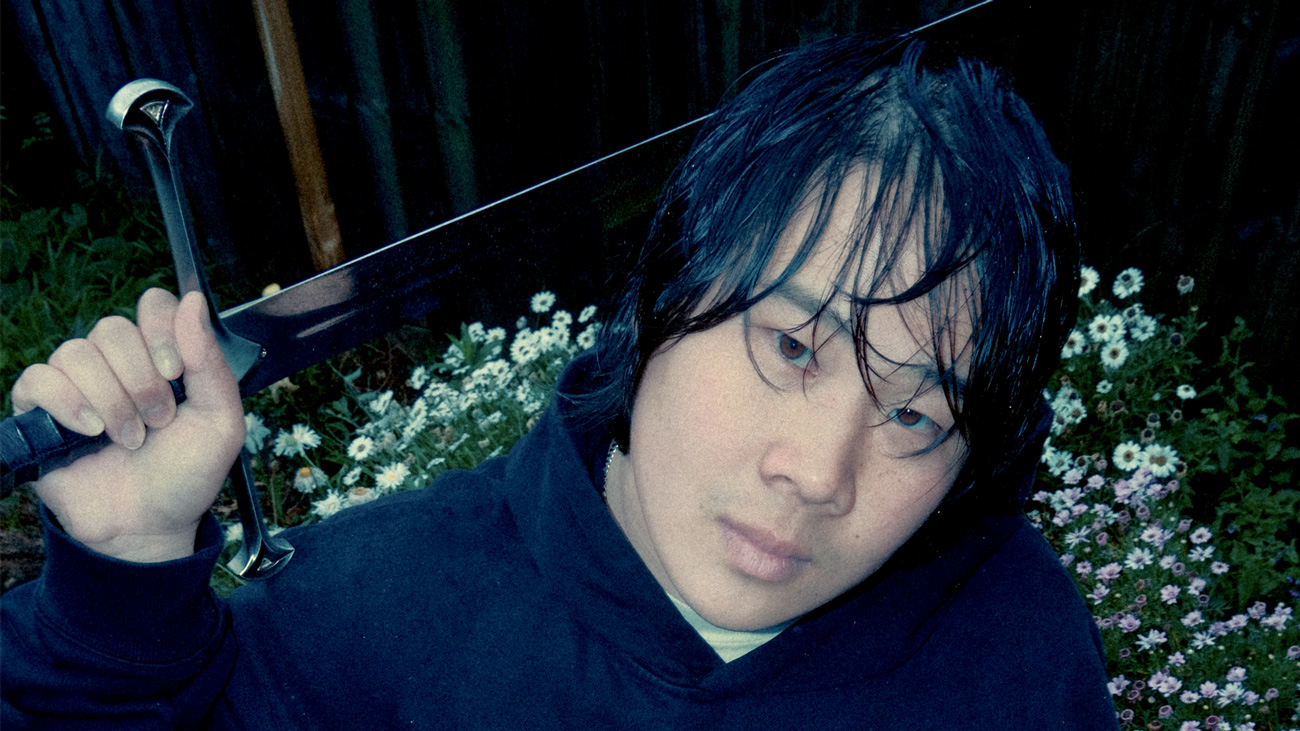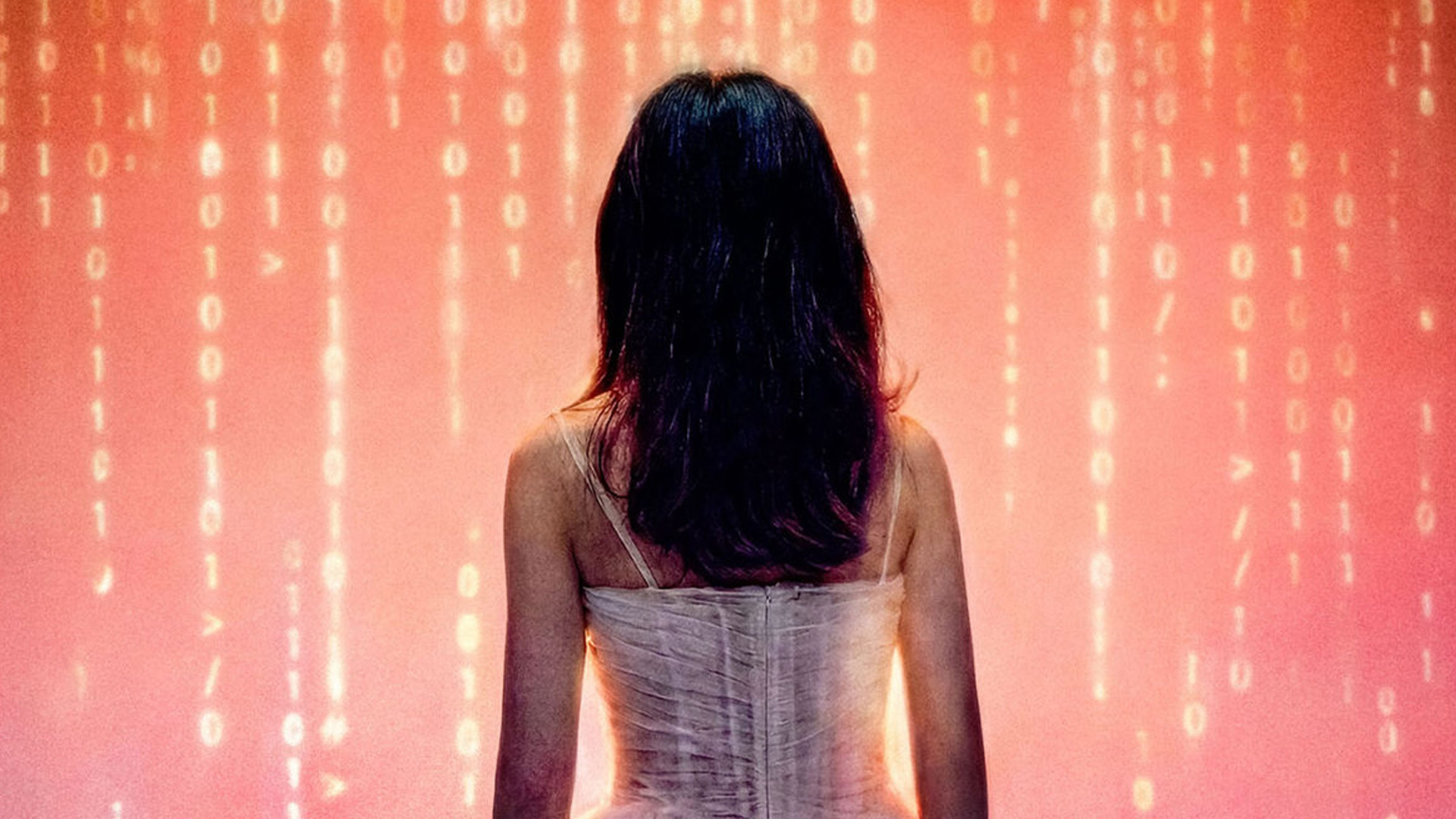

The year is 2028. LA is decaying. The world is on fire.
‘Tycoon’ is filmmaker Charlotte Zhang’s feature debut. The film tells the story of two hustlers who exist between the cracks of LA’s sprawling neighbourhoods. They steal cars, goods, and whatever they can for their next meal. They traverse a city descending into chaos as it is subjected to cockroach plagues, ICE raids, wildfires, livestock epidemics, and pharmaceutical companies peddling out waves of new drugs to the masses.
While ‘Tycoon’ comes from Zhang’s mind, the film’s concerns and urgency are inseparable from the incoherence of the last decade. Drawing on her experience in moving image, Zhang blurs the lines between fiction, documentary, and mixed media. The result is a film that feels dystopian, experimental, investigative, original, and broadcast directly from the margins of society.

Hi, Charlotte. Thanks for taking the time to chat. How does it feel for a ‘Tycoon’ to be making the festival circuit? Does it feel surreal that it’s playing half a world away from you in Sydney?
It’s been fun. I don’t know if I had any real expectations. That’s not to diminish the work and the efforts of the cast and crew. I just believed in the work. Even if it premiered on a bedsheet in someone’s backyard, I would have believed in it just as much.
It is really lovely to be able to go to all these festivals, like Rotterdam, which I admire in particular. There were some really lovely people at the premiere. It’s quite exciting.
I’m curious about how it’ll play in Sydney. Even though it is deeply an LA film, it still has a certain appeal. It’s nice to bring the film to different cities and countries and hear people say it reminds them of their past selves, younger siblings, and people they knew growing up.
I’m definitely interested… I mean, I’m not familiar with the film scene in Sydney.

Photo courtesy of Lucky Tennyson
Even something you said is making me die to go off on a tangent (laughs). I think there’s a perception of Sydney as being shiny and beautiful, with beaches etc. But I do think there’s an underlying unrest. There are parts of Sydney that go overlooked. To me, your film captured that attitude so well.
I was going to say, I know that Sydney hosted the Olympics.
Correct.
I feel like host cities undergo years of displacement and redevelopment leading up to the Olympics. It makes me wonder how much has changed in those years.

When I think about ‘Tycoon’, I’m not sure how to describe it. It’s at once a character study, a dystopic sci-fi that’s got a conspiratorial edge. It also has an element of alternate history, yet is so steeped in the concerns of the now. What inspired you to make such a narratively and thematically sprawling film?
I like that it’s hard to describe. I don’t want to knock anyone who’s created films that reference other films and genres. However, I find that it shifts audiences’ expectations depending on the context or festival where it is playing.
I almost find it easier to describe the film in terms of music. I always think about the way in which I’ve constructed more in the vein of a symphony or something like that. I’m always trying to pull references from many different genres. It’s always made sense to me to work in a variety of different media. For example, the Xerox inter-titles throughout the film are meant to answer questions posed nonlingustically in the story.
‘Tycoon’ was always going to be a dense conglomeration of all these different types of images, sounds, and materials I was interested in. Also, I shot the film on weekends over the course of a year. During that time, I would change parts of the script and even the film’s direction. I removed characters and added others. I wrote the script in a way I knew I would cut, paste, and chop it up.

When I was watching the film, I got the sense that you needed to make it now. Where did that urgency come from?
I was never going to wait. I thought, no one’s going to fucking give me money (laughs). That was never an option for me. I really like this one quote from the filmmaker, Kevin Jerome Everson, which I’ll paraphrase: “I don’t need permission to make a film just like I don’t need permission to paint a painting” To me, that speaks to a desire towards fluency in the medium, where you’re not waiting years to shoot or edit in a certain number of weeks. Instead, you’re just constantly working, building, and finding new familiarity with the frame, image, and camera.
I’m also against trying to pursue the visible value of something, as if it has to look like it has a higher production value or budget than it does as a virtue. I’m really against that. I wanted to be mindful of creating beautiful and meaningful images. I shot a lot of the film on Mini DV. I find that sometimes when people shoot on legacy formats. Often, they resort to a kind of laziness where the texture looks very exotic, so they can frame the shot like shit.
I essentially studied experimental filmmaking. The idea of working with a much larger budget or within a more conventional hierarchy feels foreign to me.

When I saw the trailer for ‘Tycoon’, the film was the film I hoped it would be (laughs). The aesthetic of the trailer carried throughout the film. As a person who goes through a lot of press kits, I often read this and that was shot on 35mm film. When I finally get around to watching some of them, they’re boring as hell (laughs). It makes me question why it was filmed in that way. I love the fact that ‘Tycoon’ was the film it was sold as.
I like the fact that you stood your ground on the 35mm thing (laughs). I appreciate any director who wants to pursue certain formats. But it doesn’t speak to the quality of the film itself, you know what I mean? I don’t believe that shooting on film is a virtue unto itself. I’m also glad you said that about the trailer. It’s always funny when you watch a trailer, and it has nothing to do with the film. You’re like, “What the fuck? Which intern made this?” (laughs)
There’s a lot of conversation about Godard’s late works. It’s just beautiful to see this director, who’s worked across so many different forms in his career, lean into these crunchy, fried, digital formats. I feel like we’re still so stuck in the past, with gestures from 40 or 50 years ago about what we’d consider good filmmaking.
On Letterboxd, there’s a strong interest among young cinephiles in 1970s cinema. It feels as though if you make something look like it was filmed with technology from fifty years ago, it’s enough to be a movie. Even the ‘Save the Cat’ approach to filmmaking makes the process seem approachable, rather than requiring you to ascertain whether you have a story to tell.
That’s the thing about putting craftsmanship above anything else. It’s so funny, I feel like some of the films young filmmakers are looking at have been through phases of critical re-evaluation throughout the decades. We’ve changed our relationship to those films over the course of film history. They’re also not accounting for the fact that those were the materials available to them at the time. We have access to so many different kinds of materials. I’m not knocking on anyone who wants to shoot on film, shout-outs to them (laughs). I think invoking a particular aesthetic or style to prove to an audience that your work is of a particular calibre or in conversation with other filmmakers is not enough.

I read somewhere that nostalgia is at its highest when, how do I say this, the vibes are down (laughs). I find it interesting when I see that in film. It feels like people retreat to these traditional formats and technicalities of filmmaking. People are geeking out over film stocks and aspect ratios (laughs).
I don’t know if I stand on this one, but I’ll say it. Some of this is a reaction to the panic surrounding the industry. We’re looking to the new Hollywood for moments of hope or an explosion of creative works. It’s like you were saying, we’re clinging to these certain periods. We’ll flatten and condense what we associate with these periods of film history, then invoke them when we need to draw hope from those times. But there is no new Hollywood. The only people getting money are the people making indie, boutique horror. Shout out to that. However, I don’t think that’s sustainable either.
I love the fact that LA is such a character in the film. Why did you want to set ‘Tycoon’in LA and what role did research play in developing the film? I know that the film draws from the 92’ Los Angeles riots and the upcoming 2028 Olympics.
I’ve lived in LA most of my adult life. I spend most of my time here. I walk around and take the bus everywhere. It just made sense to shoot in a place I’m familiar with and fascinated by its history.
I moved into LA proper around 2020, at the peak of that summer’s protests. The 92′ uprising became a haunting, spectral presence, and anyone who was there back then was terrified of it happening again. The riots are such a fascinating event because, on the one hand, it’s almost incomprehensibly complicated, and, on the other, the mechanisms of power at play are quite simple. I always had an issue with how it was historized, especially with how race was flattened. I find it fascinating the connection it has to so many other historical events, namely the 84′ Olympics, which hyper militarised the LAPD and created gang task force operations like ‘Operation Hammer’. There is still a lot left to be desired in how these events are communicated and turned into a narrative.
With ‘Tycoon’, there are little bits of footage from the riots as well as ‘Operation Hammer’. I wanted to draw a historical through line. I think it’s naive to assume that any present condition is isolated. Living here, when you talk to older people, they have really fascinating accounts and memories of their experiences during the riots. That’s not something you’d find in any research or academic paper. So much of my practice, especially in filmmaking, involves conjuring environments and atmospheres.

I should’ve written it down, but I really liked the scene at the end where the cars are doing burnouts.
Oh, sideshows or takeovers.
Yeah! You captured an LA that felt so accurate and far removed from what you see in glossy streaming rom-coms.
It’s funny because when I see those films, I sometimes don’t even clock that they’re set in LA. It looks like Cleveland or something. I usually figure it out when I see a palm tree. I asked myself, “Is this here or somewhere foreign?”
Not to go off on a tangent, but that’s an interesting point to bring up. A brief history of sideshows or takeovers is that they originally emerged in the Bay Area in the late 70s and 80s. They eventually travelled down to LA and have been a cornerstone of car culture for better or for worse. People will bring up images from these events when they’re trying to communicate these really fucked conservative ideas of LA as this racialised, poverty-ridden place. Many attendees of these events are young people of colour. There’s an active attempt to demonise and criminalise them, framing takeovers as a sort of recent phenomenon. However, they’ve been happening for decades and exist in many other cities.
There is something about it that also speaks to LA’s infrastructure. The way in which the city sprawls and was constructed. Car culture is so contingent on how a city is laid out. A much denser city has a larger police presence. That’s not to say a sprawling city doesn’t have police issues; the LAPD is particularly outrageous. But it might mean that they have a comparatively sleeper-car culture. Here and in the Bay Area, we’re surrounded by industrial areas and giant intersections that you can do a lot with.

What inspired you to centre the film around young men?
It’s funny because since the film came out, I’ve been waiting for someone to ask me that. However, shockingly, no one has (laughs). I think part of it is that one of the film’s undercurrents is grind culture. It’s this very neoliberal, individualised, economic ambition. Some women engage in it as well, but its socialisation is different. I feel like I’m speaking anthropologically, which I don’t mean to be (laughs).
I think that, through the film, I was trying to better understand some of my male friends, their friendships with each other, and the ways in which they fell apart. It can be strange, confounding, and so much unspoken. That’s interesting, as a screenwriter, to be able to construct these dialogue scenes in which so much is taking place in the negative space of what is being said. My hope is that the film isn’t interpreted as a scathing critique or something. It’s just more of my fascination with how young men relate to each other and how that is conjured by economic and financial sensibilities in a time where the economy is falling apart.

When I was reading one of your interviews, the interviewer was fascinated by the scene where the main characters are taking a car ride in silence. To me that’s the peak male experience (laughs), just driving around not talking.
That’s always the scene with the most walk-outs (laughs). It’s always so quiet, you can hear the chairs moving, it cracks me up. I really love it.
I was like, “Charlotte’s done it” (laughs)
I do love the drama of that scene where after the triumph of stealing this car, it just fades in thirty seconds. Everything from there is just communicated in looks as they’re sort of cruising aimlessly down the freeway. That just feels very true.
There’s nothing more conspicuous than guys trying to be inconspicuous (laughs). As a last question to wrap things up, in that same interview you referenced this interesting idea of mythologies. I’m going to read out the quote so I don’t butcher it…
Oh fuck, what did I say now (laughs)?
I like how you said when it comes to mythologies, there’s a gravitational pull that swallows historical narratives and experiences. What would be the enduring myth of the last few years and what peoples and experiences are being flattened because of it?
That’s really interesting. I think the problem is that, at any given moment, it feels totally ungraspable. For example, I just did another interview recently where we talked about ‘Southland Tales’. I find it really funny that people kept saying it was so ahead of its time for how it engaged with these garish political performances. But then its aesthetics are very reflective of the Bush years, that post-9/11 period. It shows the pageantry of American politics in 2006.

Even with this film, it’s engaging with multiple mythologies. Most directly, it references the ‘Ring of Gyges’ as it appears in Plato’s Republic. But instead, it becomes a story of ethics and invisibility, an aspirational tale akin to ‘Barry Lyndon’.
I feel that any attempt to grasp it will fail. Maybe that’s why the film takes place just a few years into the future, because it’s a way of trying to make sense of a present that feels so incoherent. Until something is settled, we’ll argue about the definitions of just what is occurring. I was gonna say something crazy, but I don’t think I should say it (laughs).

I feel like your film is such a document to the chaos, incoherence and uncertainty of what it’s like to live through 2026.
We have lived through the rise and fall of so many empires and failed revolutionary projects. We can look back and compress those 300 or 500 years. I think it’s important to create a fiction around this present moment. I was going back and forth between dabbling in documentary and docu-fiction hybrid spaces. But I refrained because this is a scripted film. The cast had to memorise the script, and everyone put a lot of work into it. I think that by posing it as purely fiction, you can speak more clearly to something, take a bigger swing at it, and be willing to be wrong.
This is an off-hand thought, but I do think there’s a wave of Frankenstein movies, which I feel is such a response to the film industry’s fear of AI. Maybe there are more concrete reasons to do with copyright or something. There was that one year when there were two movies about the news reporter Christine Chubbuck. Looking at the mythologies that are being referenced in mass is a really interesting way to understand the fears of the present.
Thanks to Charlotte Zhang for taking the time to chat. You can follow her @charlottezhuojiazhang and see all her past work as an artist and filmmaker here. You can catch ‘Tycoon’ tomorrow evening (10/6) at this year’s Sydney Film Festival. Make sure to get a ticket as they’re selling fast.