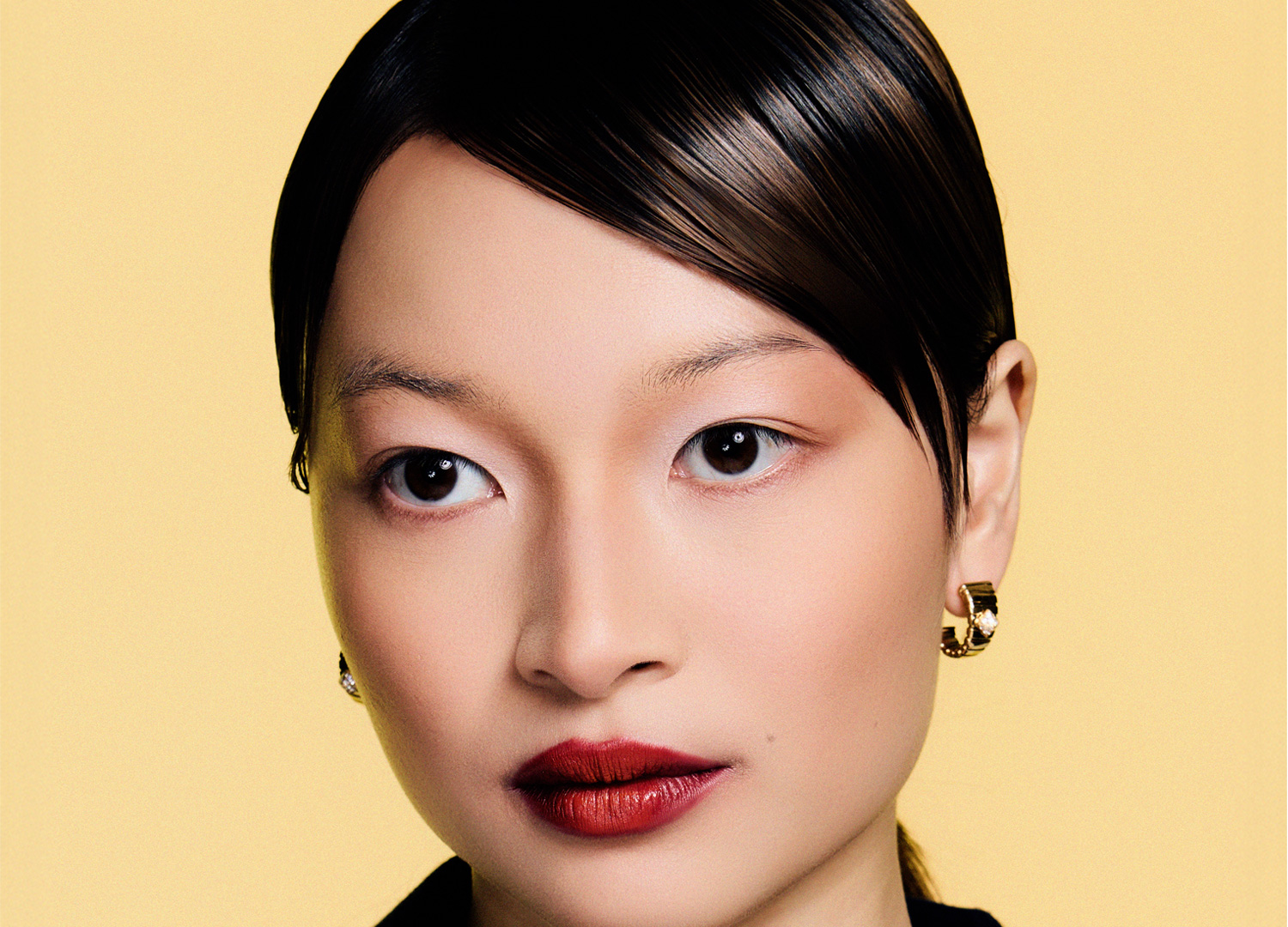

Blood Lotus is the alias of Naarm-based artist Hannah Wu. In just a couple of years, she has blossomed in the Australian indie music and art scene. Whether on record or on stage, Wu has entranced audiences with her hypnotic approach to dance and alt-R’n’B. However, the connections Wu draws through her music extend beyond the limitations of a song’s form.
Inspired by studying traditional Chinese folk and music, Wu used her precious JobKeeper payments during lockdown to purchase a guzheng, which led to experimentation and helped define her artistry. As a result, Wu has been able to create sonic soundscapes that dissolve the barriers of linear concepts. Her music echoes from a space somewhere between Australia and Asia, the past and future, and the thin line separating sleep and consciousness. Her journey thus far has culminated in her debut album, ‘Middle of the Night’. Over 9 tracks, Wu sonically peels back a wound laid bare by a breakup, using the pain as a catalyst for a self- metamorphosis. The LP is euphoric, lush, haunting, and a declaration that Blood Lotus has arrived.

We’re doing this interview a week before the album comes out. So prematurely, congratulations on the release of the album!
Thank you.
How does it feel being so close to the release of ‘Middle of the Night’?
I was literally chatting about this with my producers yesterday. I’m such a Sagittarius; I feel like I’m not really thinking too much about the release, since I’m working on my next album. I’ve been in Sydney for a music residency over the past month, which has been so great. I’ve just been in the studio every day, working with different producers. I think I need to offset anxiety about releasing music by working on the next project.
I’ve spent the last three years working on this album (Middle of the Night) with my amazing team, collaborators and friends. I think everything was recorded and shot probably over a year ago. It’s like this big baby that we’ve put so much effort into, which is about to come out. There’s always a lag between when you make the thing and release it. It’s exciting; we’ve all worked so long on it. I’m really grateful.

To take it back to the early, early, early days, what role did music and performing have in your upbringing and adolescence?
I played a lot of music in high school. I was really obsessed with piano and singing. I was classically trained on the piano, but loved doing emotional covers of Drake and other pop songs (laughs). I loved alternative R’n’B and electronic music, and was really into FKA twigs and Arca, who’ve been two of my biggest inspirations.
When I got to uni, I initially intended to pursue academia; writing, literature, and publishing. Then three years ago, I went through a bad break-up and decided to write an album, which seems to be every musician’s origin story (laughs). During this time, I realised that I actually wanted to pursue music. I became obsessed with the guzheng, an instrument that has been played in China for millennia. During lockdown, I started playing around on it, and was inspired by the pentatonic scales that the instrument used, which influenced the way that I write melodies. I think everyone in lockdown made an insane purchase because of JobKeeper. Mine was the guzheng and 10 kgs of Kewpie mayo (laughs).
Ever since, I’ve been experimenting with the guzheng, non-western scales and different instruments with electronic music. I’ve been working very closely with my producers, Will and Neil, who are also my close friends. We have a group of friends in our music collective who are all also producers and musicians. It all happened very organically. It’s been life-changing and inspiring.

When I was going through the press notes for the album, I read that it came out of a breakup, which led to a period of self-reflection and identity formation. But as you mentioned, the album was made over three years with Neil and Will, and between Naarm and Taipei. Was there a point where you were explicitly working on ‘Middle of the Night’, or was it more an organic, creative journey that culminated in the album?
It definitely felt more organic, in the sense that we were just making a bunch of music together. Last year, I was living in Taiwan and spent a lot of time in China with my family, in 2023. I also still had one foot in academia, and had the opportunity to study and live overseas. That was so beautiful. I got to study Chinese music. I was working with many traditional instrumentalists, listening to, playing with, and learning from them. I was exposed to different modes of singing, scales, and the way melodies move, which I believe translated into my melodies. It’s quite non-Western. But I have also integrated many Western, pop, and black styles into my music. It’s a mishmash of everything.
The music community in Asia was just so inspiring, fascinating, and rich. There’s such interesting underground music going on there. The communities are really tight-knit, caring, and amazing. I drew a lot from my time overseas.
I think overall, everything felt organic and it only became structured afterwards.

I’m not sure if I’m projecting something that interests me. Still, I’m really curious about the idea of archiving and preservation through art. I don’t want to presume that’s a reason you started, but is this something you consciously considered in your music?
That’s such a beautiful thought. It’s an idea that really resonates with me. That sense of not only preserving tradition but transforming it. There’s a notion that Chinese music is locked in the past. As if it’s an old school thing that’s an invincible monolith. I think that can be really problematic; it’s like pop: it’s always changing. It’s always adapting to different conditions. It’s why I think the work of diasporas is so exciting. It’s like a hybridisation of different cultures and forms, which is really fascinating to me. I don’t want to say “preserve,” as that feels too anthropological. Still, there’s something to be said for honouring tradition in music.
Reinvention and innovation are important to me. It’s really interesting because in China, traditional music and folk traditions weren’t passed or written down on a score or sheet music, as they were in the West. A lot of it was passed down orally through different groups and generations. That’s meaningful to me in some ways. Maybe it has something to do with my name, Blood Lotus, as well, which relates to ancestral bloodlines and pays respect to past cultural traditions.

I was reading the press notes (again). I liked how one of the album’s themes is the dichotomy between empowerment and vulnerability, with shifting emotions. What drew you to this concept? And as a bigger question, do you think we’re collectively any better at identifying and addressing our emotions?
Wow, that’s an amazing question. Hmmm, I’m just thinking about how to respond to that. I really like the etymology of the word emotion. My lovely housemate actually sent that quote to me. It’s such a beautiful thought. I always think about it because most of the lyrics of the album were written while I was moving between Australia and Asia. I was spending a lot of time in these different cities.
I love moving. Maybe that’s just how I like doing things; I like a lot of momentum, I don’t like feeling stagnant. Maybe there’s something there; how movement is linked to the etymology of emotion. The first song I ever put out was ‘Motions’. I like being in motion. I love hopping on a flight (laughs).
In terms of how we deal with our emotions these days… I feel like sometimes we can be overly prescriptive about our emotions. When I’m with the girlies, we’ll overanalyse what someone’s action meant. I feel like we have a lot of tools and language around emotions at this point. There’s a lot of pop psychology, with everyone talking and narrating about themselves and the world in different ways. Language always helps us better understand each other. But I’m not sure if we’re any better at addressing our emotions. Sorry, does that make any sense (laughs)?

I think that’s a great way of putting it. There’s a lot more language and conversation around emotions. Still, I’m not sure we’re any better at addressing it as a whole, in a broader sense. I also think about this stuff and talk about it a lot, to the chagrin of everyone around me (laughs).
I’m curious to hear what you think.
I think a lot of guys are comfortable talking about their emotions. But it feels like just expressing and talking about it is the full stop. It’s like I’ve done the work because I can talk about it. But what’s next?
Totally. There’s a lot of pop psychology. Sometimes it feels like the language is just a way to justify why someone did something. It explains it but doesn’t…I don’t know…resolve it.
Looking through your tour dates in the next couple of months, it looks pretty hectic. You’re playing Parramatta Lanes in October! Outside of music, what do you do in your downtime to decompress?
I hang out with my friends, watch movies. I love cooking with my housemate, Fi. We love cooking for each other. I don’t actually get much downtime.


As a last question, to give you a little background info, we first started as a food Instagram account. As a nod to that, we always like to leave it on a food recommendation. Is there a dish or place that our readers need to try?
Have you visited Taiwan before?
Yeah! I was in Taipei for like four days last year and it was sick. I loved it. We went to the ‘Spirited Away’ town, which has nothing to do with ‘Spirited Away’, which I thought was so funny (laughs).
Taiwan is my favourite place. I want to move there someday. I’m not sure if you tried this at the markets, but there’s a really beautiful peanut-coriander ice cream roll. They put sesame ice cream on top of a peanut pancake with coriander inside. They roll it up into this little wrap, and it’s so good.
What about you?
In terms of Sydney, my recommendation is actually a Taiwanese spot called Cho Dumpling King in Chinatown. You squeeze in there like sardines in a can. They sell these bento meals with Taiwanese fried chicken and stewed minced pork on rice.
I love going into a shop, and there’s like some old auntie who’s been running it for three generations, and everyone’s yelling. You know the food will be amazing.
When I sometimes go to “nicer” places and they ask, “Have we enjoyed meals?” In my mind I’m like, “Don’t talk to me” I need someone to yell over me at someone else (laughs).
Yeah, I need clanking porcelain (laughs).
Special thanks to Blood Lotus for taking the time to chat. ‘Middle of the Night’ is out now. Make sure to listen it and check out Blood Lotus as she plays a bunch of east coast shows over the next few months. Special thanks to the good people at Content.net.au and twnty three for making this happen. All photos were shot and come courtesy of Marlena Goldberg and Joshua Ngai.