Oh, we saw everything.
You Can See Everything has been on the feeds and headlines since its September premiere at the Telluride Film Festival. The details behind the film were kept intentionally vague. In an age of endless titles spreading across an ever-expanding catalogue of streaming services, this has become the must-see movie of 2026. If you’re not chronically online or slinging a New Yorker tote bag, let me catch you up. You Can See Everything is the debut directorial collaboration between Lance Oppenheim and Nathan Fielder. For Letterboxd bros, this is the Dutch-and-Dillion handshake, but with boundary-pushing documentary filmmaking replacing the bulging biceps. While both usually aim their lens at the fringes of society, this time they set their sights on one of the most fascinating figures of the last decade: Elizabeth Holmes.
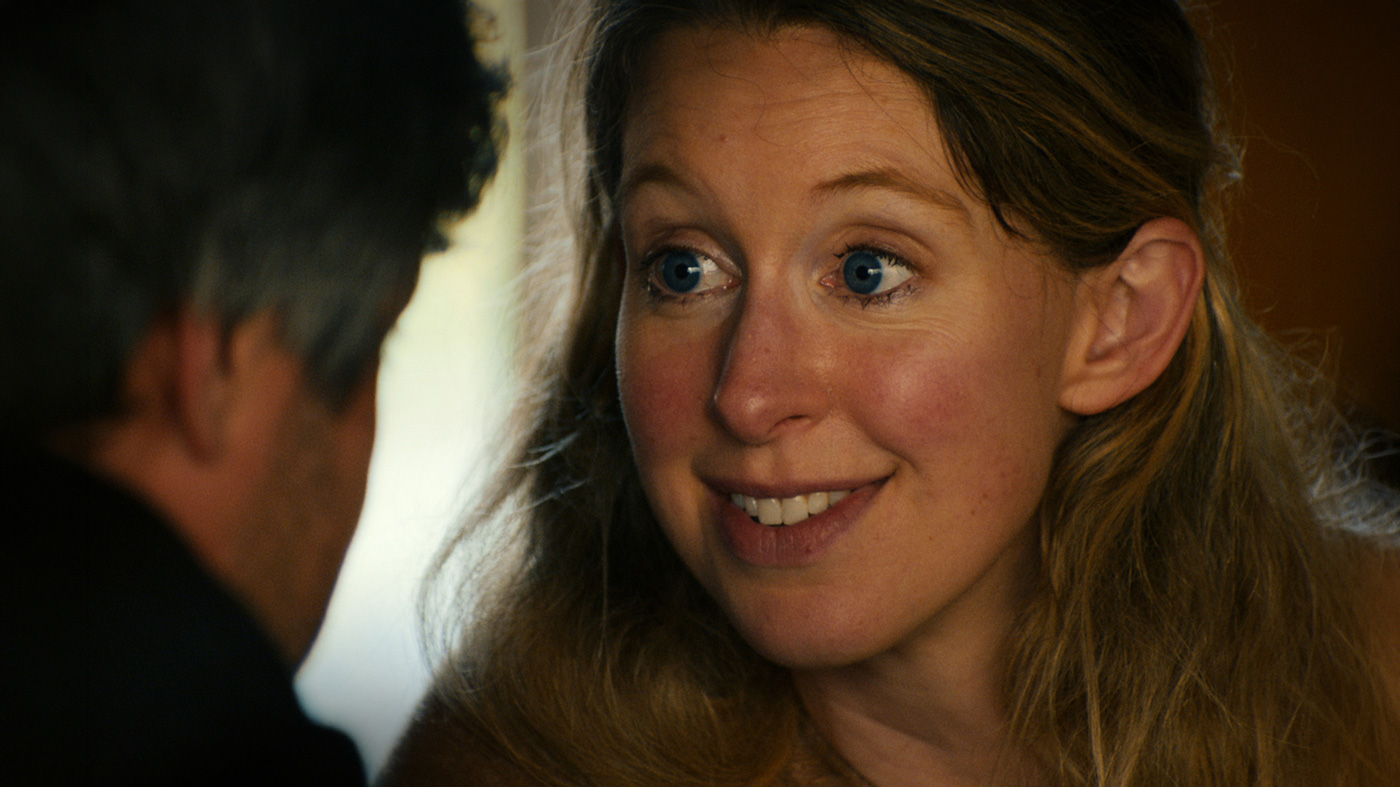
The film is set 35 days before Holmes surrenders and begins her sentence in Federal prison. We first see her patting her baby’s back, talking about the prospect of filming with her husband, Billy Evans. At this point, she has been indicted, convicted, sentenced, and shamed in the media and court of public opinion. She couldn’t be further from the turtleneck-wearing Holmes pinching a pill of blood. The scene ends with Holmes framed by the bars of her child’s cot, a foreboding image that sets the broad framework for the film we’re about to see. Or does it? In steps Nathan Fielder.

Fielder has built a career on hosting elaborate conceits and awkward interactions, all meant to touch on truths buried deep in his subjects’ subconscious (see Nathan For You or The Rehearsal). Just like his television series, he places himself in the action, playing partial detective and provocateur. However, with Oppenheim’s skilled touch, Fielder’s presence and methodology are given much more weight. In the film’s first half, his frustration towards Holmes and Evan’s elusive answers and willingness to bend semantics is palpable. Fielder has met his match. In the film’s second half, You Can See Everything twists and turns like a 1970s conspiratorial thriller. What could’ve been a linear character study about the last days of Holmes’s freedom instead becomes a sprawling narrative about ambiguity, performance, and how the truth has more than one interpretation.

At the media screening I attended, we were greeted by a Zoom recording of Oppenheim and Fielder. In their monotone voices, they asked us to preserve the experience for others by not spoiling anything. This sounds trite, but knowing as little as possible about the film is the best way to see it. However, it might be a good idea to refresh yourself on Holmes, Theranos, and the general discourse around the story. With that said, it’s not a dealbreaker.
For a 3-hour film, You Can See Everything had me gripping my armrests, absorbed in its twisty story. It feels as though the film is simultaneously asking you to absorb everything you’re seeing through a mesh of scepticism while taunting you to resist its suspense and revelations. To Oppenheim and Fielder’s credit, it’s a huge swing to give so much and validate so little.

After the film ended, I felt ambivalent about Holmes. Is she a master manipulator, victim of a toxic relationship, or a driven entrepreneur whose syntax is tragically misunderstood? Is it even possible to be all three? I’m not sure, but I know two things: 1) You Can See Everything will make for riveting water cooler conversations; 2) Billy Evans sucks. He’s the closest the story gets to an outright antagonist, and we’re talking about a film centred on Elizabeth Holmes!

Thanks to A24 and Nixco for the media screening and all assets. ‘You Can See Everything’ is cinemas from tomorrow.